



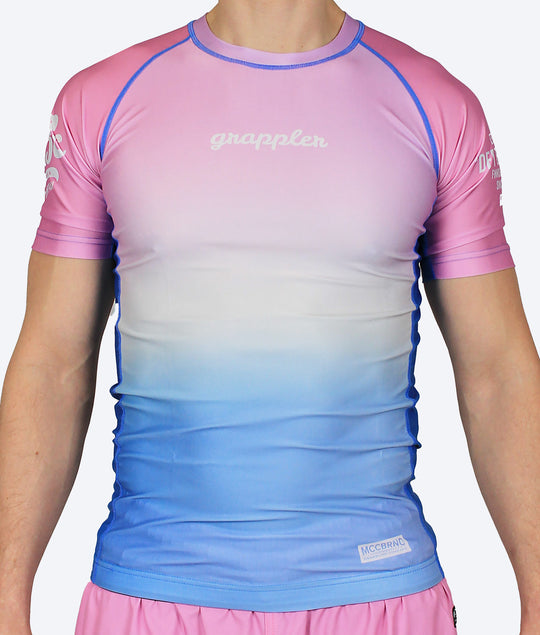


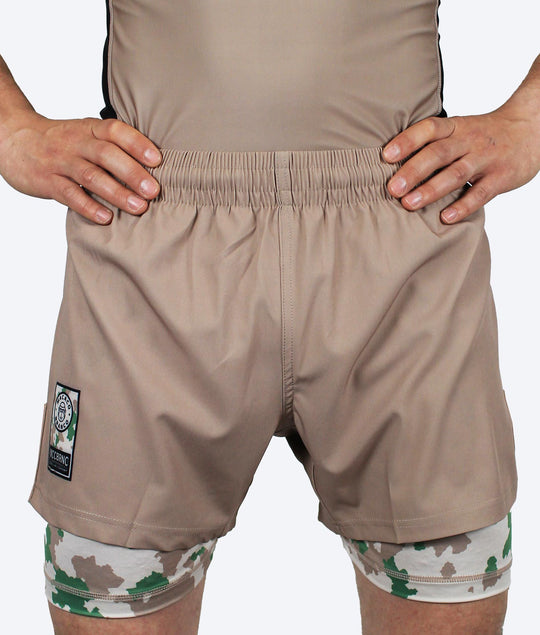


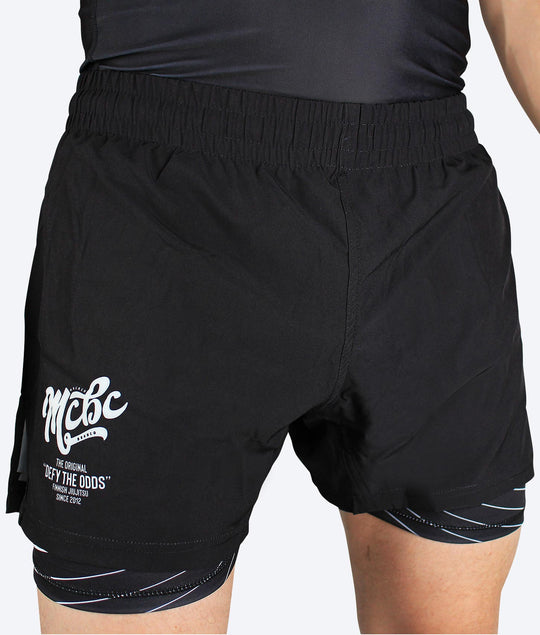


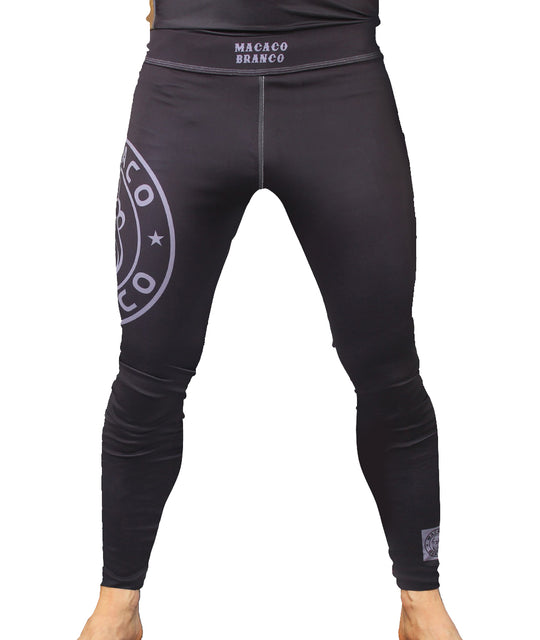


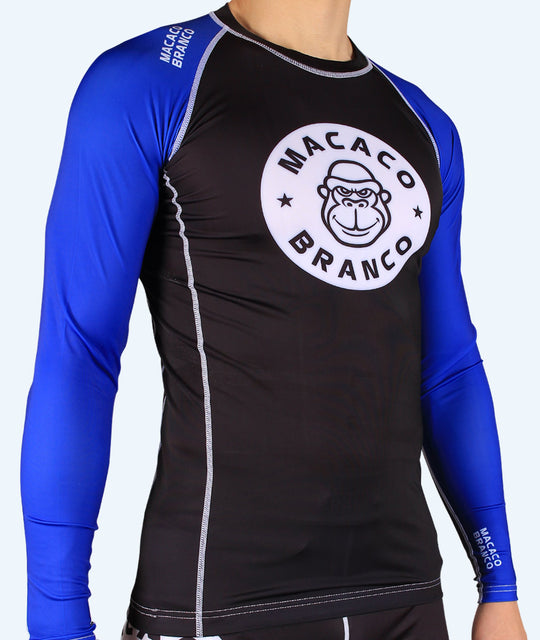

























For your first No-Gi BJJ class, wear a fitted training top and shorts without pockets, zips or hard fittings. A rashguard and grappling shorts are a straightforward kit, but ask your academy what it accepts for a trial class before buying. Some allow ordinary sportswear; others require a particular uniform.
No-Gi means training without the traditional gi jacket and trousers. Your clothing needs to stay in place while you bend, sit and work with a partner. This guide helps you choose a simple first outfit, check clothing you already own and decide which purchases can wait.
What to wear to No-Gi BJJ: a first-class checklist
Confirm that the session is No-Gi rather than a gi class, then ask the coach about clothing and required equipment. Use this list to check your outfit before leaving home.
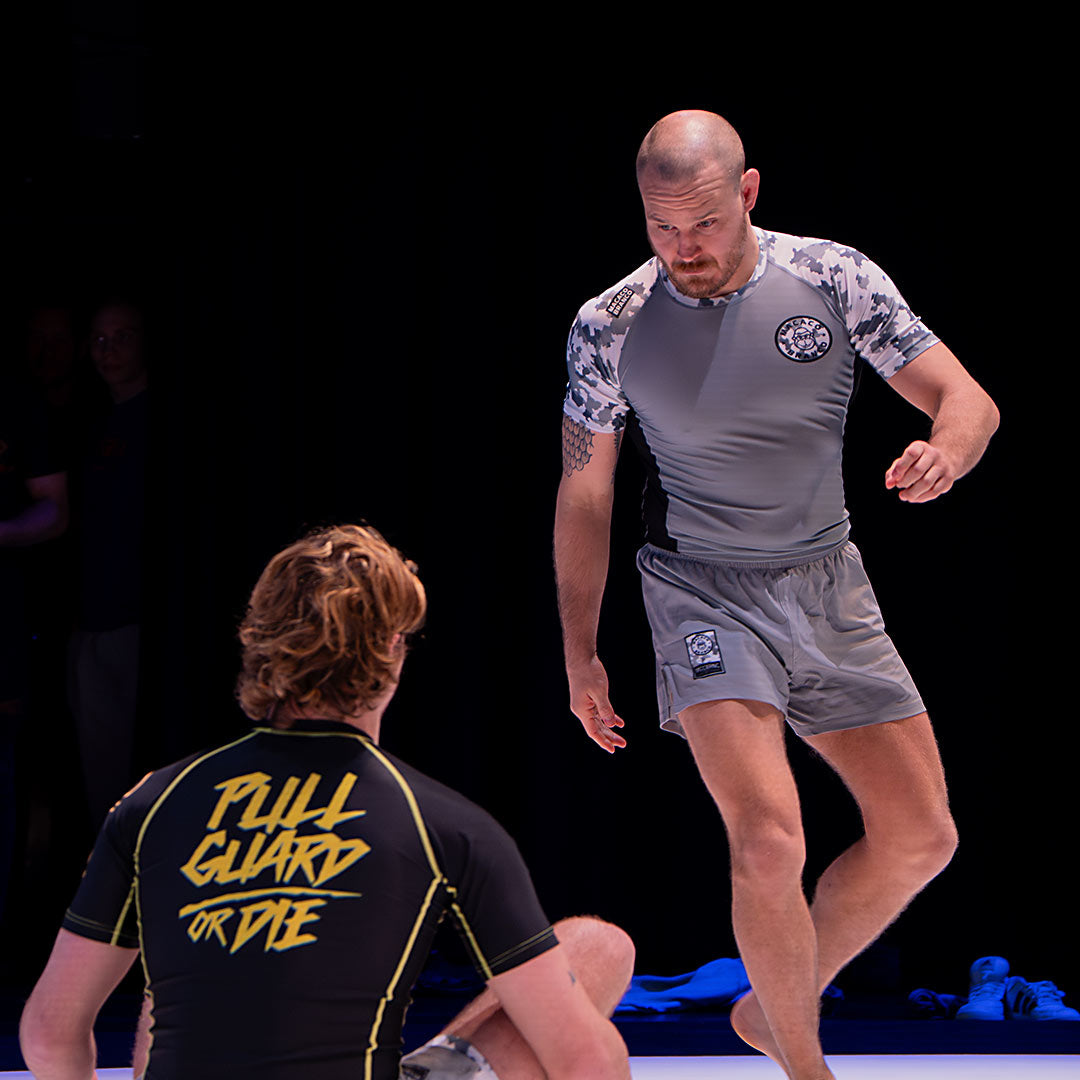
- Top: a clean rashguard or fitted athletic shirt accepted by the gym. It should cover your torso during movement without hanging loosely.
- Bottoms: grappling shorts or another academy-approved option without open pockets, exposed zips, buttons or hard fittings.
- Underlayers: comfortable underwear or compression clothing appropriate to the outfit. Check coverage when you squat and sit.
- Off-mat footwear: sandals or similar footwear for changing rooms and other areas outside the mat, following the gym’s instructions.
- Extras: bring any equipment the coach requests, such as a mouthguard. Confirm this before class rather than assuming every academy has the same policy.
A useful message to the gym is: “I’m coming to my first No-Gi class. Are a fitted sports shirt and pocketless shorts okay, and do I need a mouthguard?” That gives you a concrete answer before you spend money.
Do you need a rashguard, or is a T-shirt okay?
A rashguard is a close-fitting training shirt. For regular grappling, its fitted cut avoids much of the loose material of a casual T-shirt. For a trial session, the academy may accept a sports shirt you already own. Check its policy rather than assuming a rashguard is compulsory everywhere.
Look at how the top behaves when you move. Raise both arms, turn your shoulders and bend forward. It should stay comfortable at the neck and underarms, cover your torso and allow normal movement. A shirt that is tight while standing still may be too restrictive once you reach overhead.
Short sleeves and long sleeves are both common training choices. Longer sleeves cover the forearms; shorter sleeves leave them exposed. Neither option replaces checking the fit. For detailed measurements and a comparison of sleeves, use our rashguard size and fit guide.
What should you avoid in a training top?
Leave hoodies, loose drawstrings and tops with hard decorations out of your grappling kit. If a garment bunches into large folds or needs constant adjusting during a simple movement check, choose a more suitable option. The aim is clothing you can forget about once the coach begins explaining the drill.
Choosing No-Gi shorts: check more than the waist size
Shorts that work for running or lifting are not automatically suitable for close-contact training. Check the front, sides and back for pockets and fittings; a small zipped pocket is easy to miss. Ask the gym about any fastening you are unsure of.
Try three movements: a deep squat, a high knee lift and sitting on the floor. The waistband should stay secure, the leg openings should allow movement and the fabric should not pull sharply across the seat. Check that coverage is comfortable in these positions, not only in a standing mirror view.
Different cuts suit different preferences. Macaco Branco offers a longer Classic-style No-Gi / MMA short and a shorter Short Shorts model. Compare the individual size guide and cut before choosing; a shared S or M label is not enough to predict every model’s fit.
Can you wear leggings or spats?
Spats are close-fitting training leggings. Some gyms accept them on their own, while others want shorts over them. Check the local rule and choose opaque fabric that remains comfortable when stretched. Test the full outfit together so the waistband or extra layers do not bunch up.
If you use shorts with a built-in compression layer, try that combination before adding separate spats. More layers are not automatically more comfortable. Start with the coverage and fit you need, then adjust after you have trained in it.
Do beginners need a ranked rashguard?
A ranked rashguard includes colours associated with BJJ belt rank. Ask whether your academy requires one for ordinary classes. You do not need to solve competition-uniform choices before your first lesson unless the gym specifically asks you to.
Training and competition requirements are separate. IBJJF, for example, has specific No-Gi uniform rules for shirts and shorts. Our ranked rashguard guide covers that decision in more detail. A product suitable for training is not automatically approved for every event.
What to pack for your first No-Gi class
- Your clean training outfit and any coach-required equipment.
- A water bottle and a towel.
- Sandals or other permitted off-mat footwear.
- A clean change of clothes for the journey home.
- A separate bag for used kit, plus shower items if you plan to shower at the gym.
Remove jewellery and watches before partner work, and keep nails short. Arrive early enough to ask where to change and what to do with shoes and belongings. Tell the coach it is your first session so they can explain the class format and any equipment requirements.
Policies vary in practice: BJJ Dojo Berlin lists suitable beginner clothing, while Grappling-Dynamik’s FAQ also allows ordinary sportswear at the start. Your own academy’s instructions take priority.
What should you buy first if you decide to continue?
Start by replacing the weakest part of your current outfit. If your top constantly rides up, focus on a well-fitting rashguard. If the shorts restrict movement or have unsuitable fittings, replace those first. You do not have to purchase a large matching set to start learning.
Then consider how often you will train and how quickly your kit dries. One complete outfit may suit an occasional session with time to wash it; more frequent classes can make a second clean set useful. This is a laundry decision as much as a wardrobe decision.
After training: make the kit ready for next time
Unpack used clothing when you get home and follow each item’s care label. Close hook-and-loop fastenings before washing them with softer garments, and let the kit dry fully. Do not copy the washing temperature from a different item just because both are sold as grappling clothing.
Use your first few sessions to note practical fit issues: a waistband that slips, seams that rub or a top that needs adjusting. Those observations are better guides to your next purchase than choosing solely by colour.
First No-Gi class: common clothing questions
Can I wear normal gym shorts?
Only if they meet your academy’s requirements. Check pockets, zips, hard fittings, movement and coverage. “Sports shorts” describes many different designs.
Do I wear a belt in No-Gi?
You normally train without the traditional gi belt. An academy may ask you to represent rank through clothing, so check its policy.
Do I need a mouthguard before the first class?
Ask the coach beforehand. Requirements can depend on whether the introductory class includes partner drills or sparring. Follow the fitting instructions for any mouthguard you use.
Can I wear shoes on the mat?
BJJ is usually practised barefoot. Follow the gym’s mat policy and keep off-mat footwear available for the rest of the facility.
Once you know the academy’s requirements, browse No-Gi rashguards, shorts and spats and choose the pieces that complete your kit.